
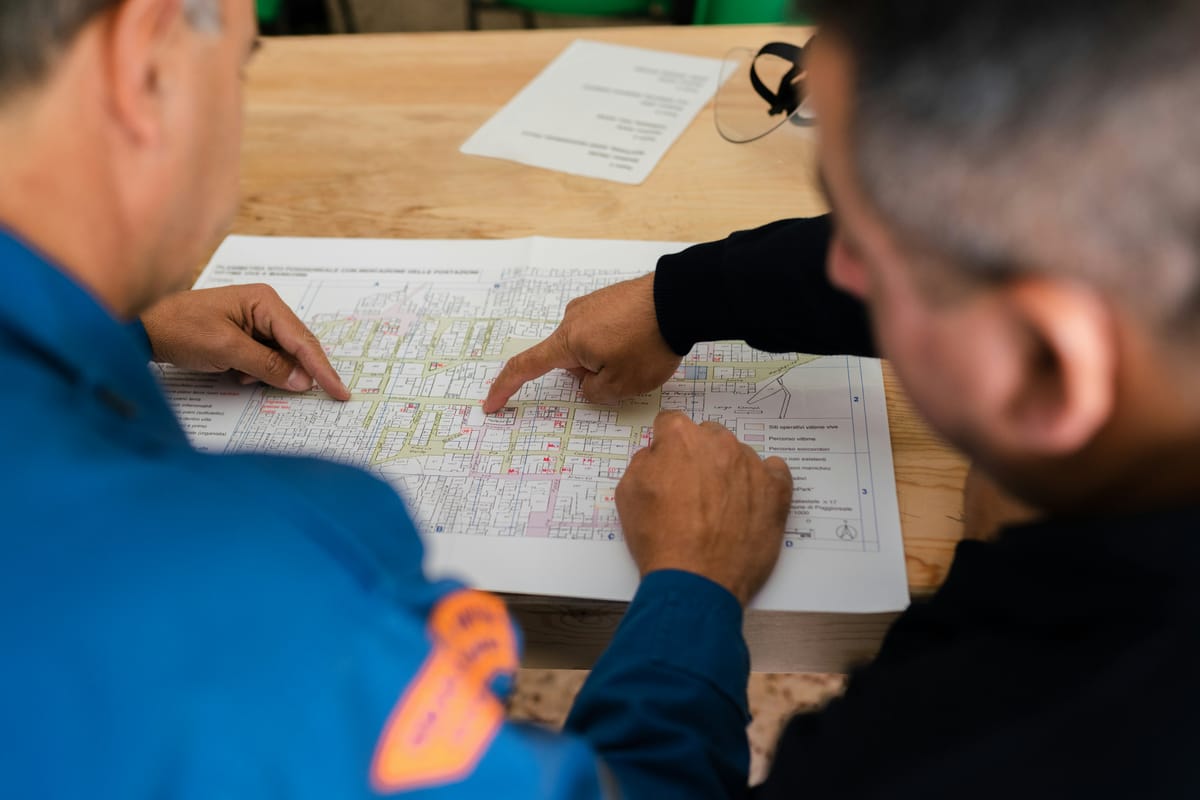
You walk into the room (or the Zoom). One by one, your engineers say what they did yesterday, what they're doing today, and whether they're blocked. Nobody asks a question. Nobody offers help. Twelve minutes later, everyone goes back to their desk with the exact information they had before the meeting started.
Congratulations. Your standup is now a status report read aloud.
This is the most common failure mode of any engineering team's daily sync, and it has almost nothing to do with discipline. It's a design problem. The three classic questions yesterday / today / blockers were never meant to surface coordination. They were meant to surface coordination back when standups were 4 people standing around a physical board. Strip the board, scale the team, add a remote leg, and the questions stop working.
Key takeaways
- Standups drift into status reports when the format optimizes for reporting up, not coordinating sideways.
- Replace the three classic questions with three coordination questions that force interaction.
- Move the reporting part ("what I did yesterday") out of the meeting and onto an async board column. The meeting is for the parts that need a human in the loop.
- If the meeting could be a Slack thread, it should be. If it can't, run it differently.
- Engineering managers should measure standup health by what changes after the meeting, not what's said during it.
Why standups become status reports
The original ritual assumed three things: a small team, a shared physical artifact, and a manager who was a peer in the work. When any of those three breaks, the meeting tilts toward performance.
- Team grew past 6 people. Now each person speaks for 90 seconds and listens for 9 minutes. Listening drops off after the second person.
- The board isn't in the room. Without a visual artifact, people describe their cards instead of pointing at them. Describing takes longer and surfaces less.
- A manager joined the circle. The moment anyone in the room reports to anyone else in the room, the format becomes performative. Engineers stop saying "I'm stuck on this dumb thing" and start saying "making good progress."
None of these are character flaws. They're predictable responses to the meeting's shape. Fix the shape, the behavior follows.
The 3-question reframe
Throw out yesterday / today / blockers. Replace with these three:
1. "What do you need from someone else in this room today?"
This is the only question that justifies the meeting existing in real time. If nobody needs anything from anyone, the meeting could be an async update. If someone does, you've just saved them a half-day of waiting on Slack.
2. "What did you learn yesterday that someone else should know?"
This catches the silent context leaks: the gotcha in the deploy script, the API quirk, the customer thing the support team mentioned. Status reports never surface these. Coordination meetings do.
3. "What's at risk of slipping this week, and what would unstick it?"
Forward-looking, not backward. Forces the engineer to think one layer up from "I'm blocked" into "here's the shape of the help I need." Even better: it gives the EM a chance to actually unblock things instead of nodding.
Three questions. Same time budget. Completely different meeting.
The async board column trick
Here's the move that makes the reframe stick: stop trying to do reporting and coordination in the same 15 minutes.
Add a column to your board called Yesterday's Done or Shipped Since Last Standup. Engineers drop completed cards there as they finish. The EM, the PM, the curious skip-level — anyone who wants a status report — can read the column anytime. It's the report. Without the meeting.
Then the 15-minute sync gets to be about the things that actually need humans in a room together.
In Zoobbe this is one extra list on the board. Drag a card in when it's done, it sits there until the next standup, you sweep it to archive after. Real-time collab means the board updates while people speak — so when an engineer says "I shipped the auth refactor," the card is visibly sitting in the Yesterday's Done column and nobody has to repeat what it was.
What this looks like for engineering managers specifically
If you manage engineers, you have a tell that other roles don't: your standup gets quieter when you're in it. People say less, hedge more, skip the messy parts. That isn't because they don't trust you. It's because the meeting format makes any admission of struggle sound like a status downgrade.
Two things to try this week:
- Stop being the first listener. Don't make eye contact when each engineer speaks. Look at the board. Make them talk to each other, not to you. The meeting changes character within three days.
- Pre-commit the unblock. When someone says they need help, don't say "let's sync after." Say "@person, can you take 15 minutes with them at 10am?" out loud, in the meeting. Then watch what happens to the quality of next week's asks.
How to measure if it's working
The standup is working if you can answer yes to any of these after the meeting:
- At least one person changed what they were going to work on today based on what they heard.
- A specific handoff or pairing session got scheduled.
- An engineer publicly admitted they were stuck and got help.
- The team learned a piece of context that wasn't already in the board.
If the answer is no on every single one, three days running — the meeting is a status report. Cancel it for a week. Run the async board column instead. See what breaks. Usually nothing does, and you get the 15 minutes back.
FAQ
Should I just cancel standup entirely?
Probably not yet. Cancel it for a week as an experiment. If nothing breaks, you learned the meeting was theater. If coordination starts to slip on day three, you learned what the meeting was actually doing — and now you can rebuild it on purpose instead of by inertia.
Our standup is on Zoom and people multitask. Is that the same problem?
It's a downstream symptom. People multitask when the meeting isn't valuable to them. The async board column + 3-question reframe usually fixes the underlying "why am I here" question, and the multitasking drops off.
What if my skip-level wants the status report?
Give them the board column. Literally send them the link. Reporting upward is a real need, but it doesn't need to happen inside a coordination meeting. Separating the two is the whole point.
How long should a healthy standup actually take?
For a team of 6–8 engineers, the reframed version usually lands at 10–12 minutes. If it routinely runs longer, you're using it to make decisions that should be a separate meeting — pull those out.
Does this work for distributed teams across time zones?
Better, actually. The async board column does most of the work, and the live sync becomes optional or rotates. If you have a 6+ hour overlap problem, drop the meeting entirely and lean on the column plus a daily written thread for the three coordination questions.
Photo by ThisisEngineering on Unsplash